
Reaper Actual Is Not Ready for My Money Or Yours and May Never Be
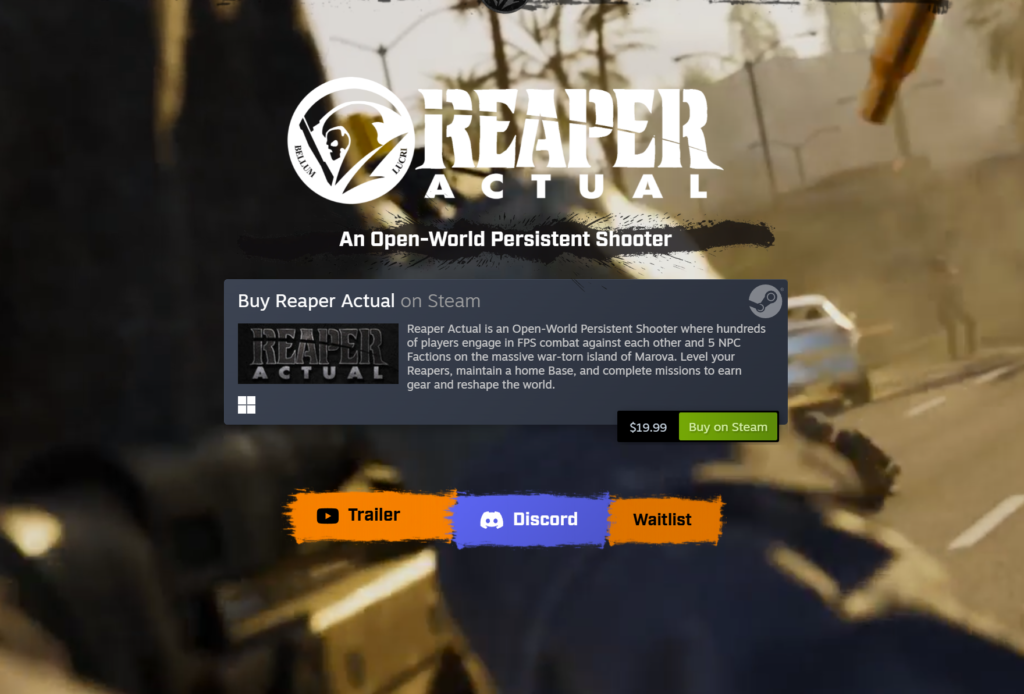
I cannot recommend Reaper Actual in its current Steam Early Access state. The Steam store page sells a giant “open-world persistent shooter” with hundreds of players, five NPC factions, bases, missions, progression, and a living war-torn island. What I actually see in the launch-era evidence is a build that stumbled on the most basic parts of that promise: getting into a match, staying stable, extracting successfully, and offering the kind of baseline settings and social functionality that should not be optional in 2026. Steam itself showed the game as Very Negative, with 11% positive from 51 Steam reviews when I pulled the page, and the store also warns that it uses kernel-level Easy Anti-Cheat that requires manual removal after uninstall.
What makes this more than ordinary Early Access turbulence is that the community complaints and the developers’ own hotfixes line up far too neatly. Players were reporting infinite loading, failed deployments, crashes, broken extraction, and missing basic options. Then the June 2 patch notes said the team had fixed a manhole extraction freeze and “several crashes,” while the June 4 patch notes added full key rebinding, more crash fixes, and continued loading/streaming optimization. That is not a sign of a merely rough polish pass. That is a sign that core usability and stability problems were still being repaired immediately after launch.
The monetization makes the whole thing feel worse, not better. The base game is $19.99, and the Steam page separately lists $30 and $55 DLC upgrades, meaning the full buy-in is roughly $104.99 before tax. At the same time, the store’s own Early Access answers admit that social features, vehicles, crafting, more content, and more missions are still in development, and that major map areas are still under construction. For me, that is the wrong order of operations: charge like a product, ship like an alpha, and use the roadmap to explain what should have been there already. This review is specifically about the PC/Steam Early Access build and public Steam/official sources available through June 6, 2026.
Claimed Vision Versus Launch Reality
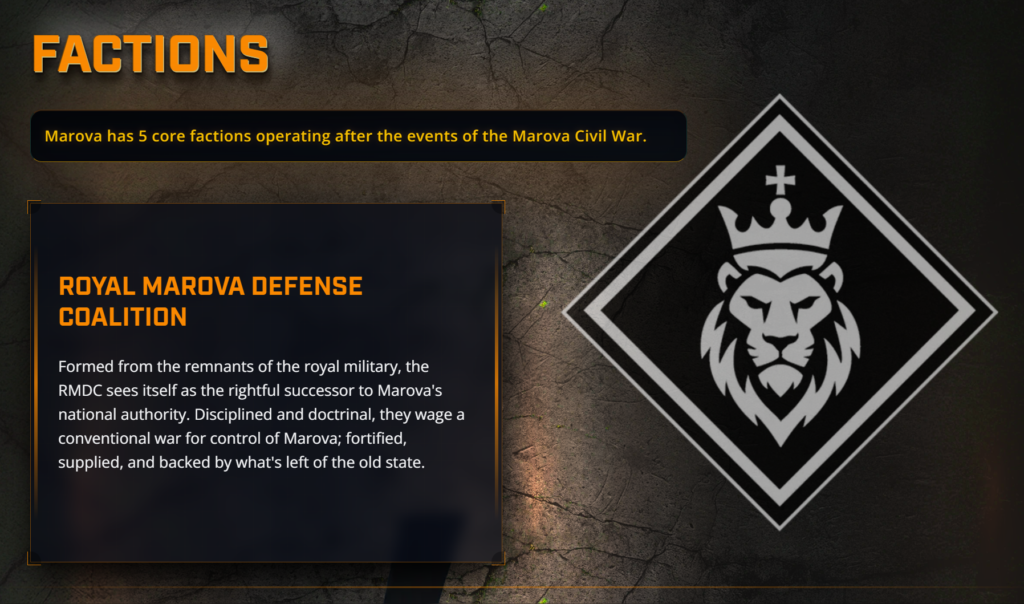
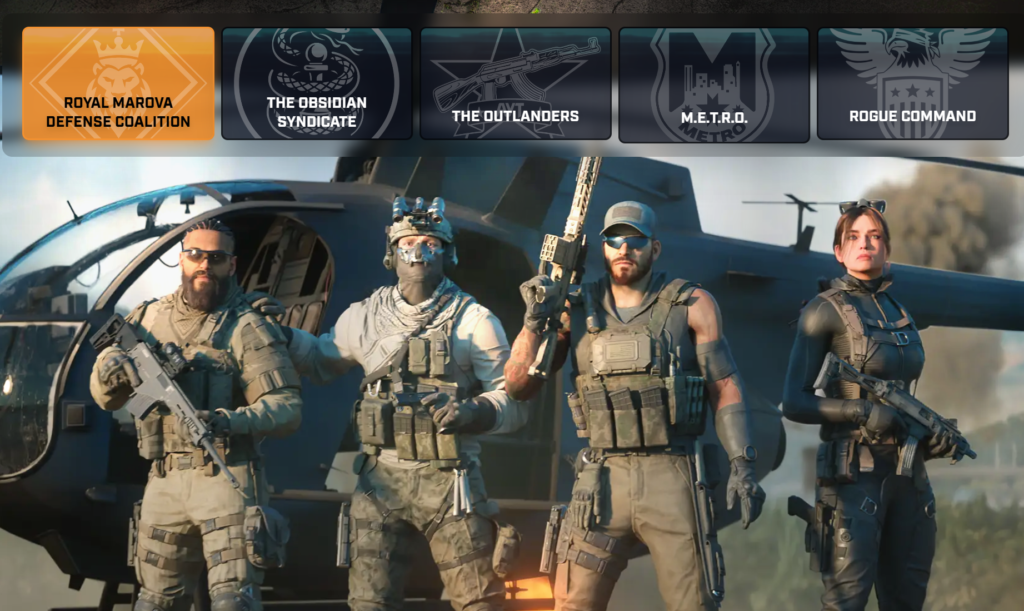
The official pitch is ambitious to the point of seduction. The Steam page describes Reaper Actual as an open-world persistent shooter where “hundreds of players” fight each other and five NPC factions across Marova, while leveling Reapers, maintaining bases, completing missions, earning gear, and reshaping the world. The official May 26 launch-delay announcement doubles down with promises of a persistent world, player bases, dynamic narrative progression, a player-driven economy, and unlockable land, sea, and air vehicles. The problem is not that these ideas sound bad. The problem is that the launch evidence makes them sound mostly aspirational.
| Claimed feature | Official promise | Current reality I see |
|---|---|---|
| Large-scale persistent war | Steam says “hundreds of players” on Marova. | SteamDB lists an all-time Steam peak of 70 players, and launch-day discussion users were talking about seeing roughly 45 players. That does not prove the design cap is low, but it absolutely undercuts the fantasy of a bustling battlefield at launch. |
| Five NPC factions | The store repeatedly speaks of 5 NPC factions in the present tense. | The same Early Access Q&A also says the team still “plan[s] to have 5 factions,” which reads like a contradiction inside the product page itself. |
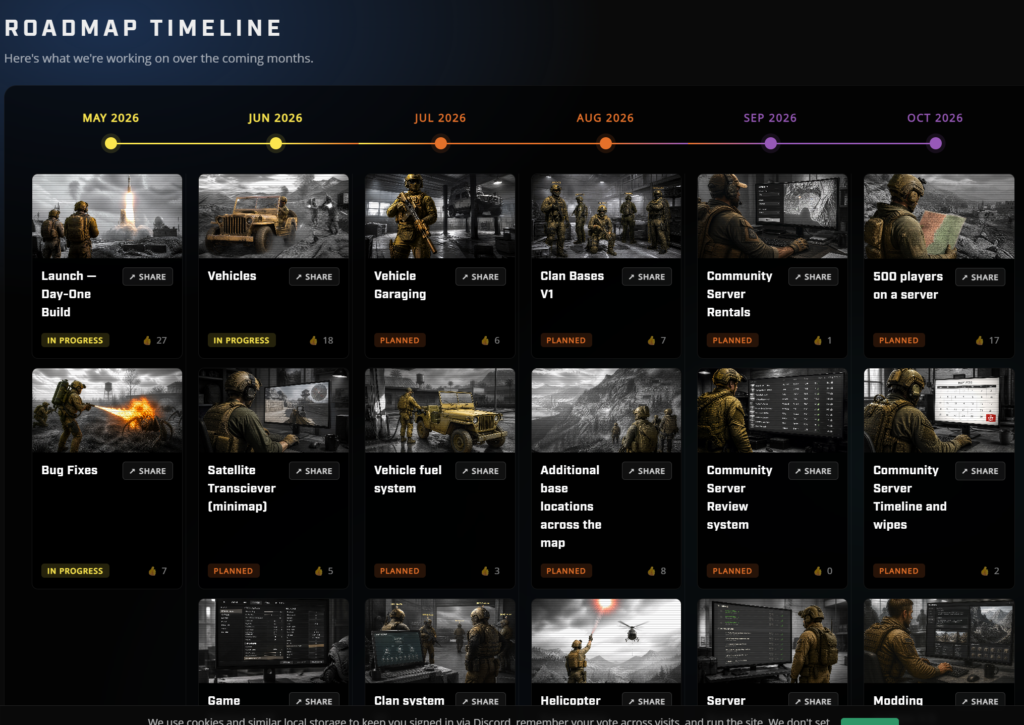
| Vehicles | The “About This Game” section touts “Air, Land, and Sea vehicles (coming soon).” The official launch-delay post says Reapers will unlock and craft vehicles. | The Early Access Q&A says core vehicle systems are still being developed, and the public roadmap still shows Vehicles, Vehicle Garaging, Vehicle fuel system, Helicopter Extractions, and a Quad style vehicle as in-progress or planned work. |
| Crafting and economy | Official messaging promises a “deep crafting system” and a player-driven economy. | The store’s own Q&A says crafting systems are still being developed, and that only certain weapon upgrades are currently available. |
| Missions and narrative | The official site promises dynamic narrative progression and interwoven missions. | The store admits the current mission system is limited, and the roadmap still lists Additional Missions as planned. |
| Social systems | The April funding post says the game is being built “with social at its heart,” and the May delay post promised grouping options and an in-game friends list. | The Steam page flatly says many social features are not in yet, “including grouping, parties and friends,” while the roadmap still shows Friends List and Clan system V1 as future work. |
| Basic settings and controls | A modern PC shooter should not need to advertise this, but by June 4 the patch notes celebrated that key rebinding had finally arrived. | A June 1 discussion thread complained there was no mouse inversion, the developer replied they were “working on key binds and mouse inversion,” and the roadmap still lists Game Settings V2 and a minimap under future work. Even after the June 4 patch, ESC still did not close UI elements. |
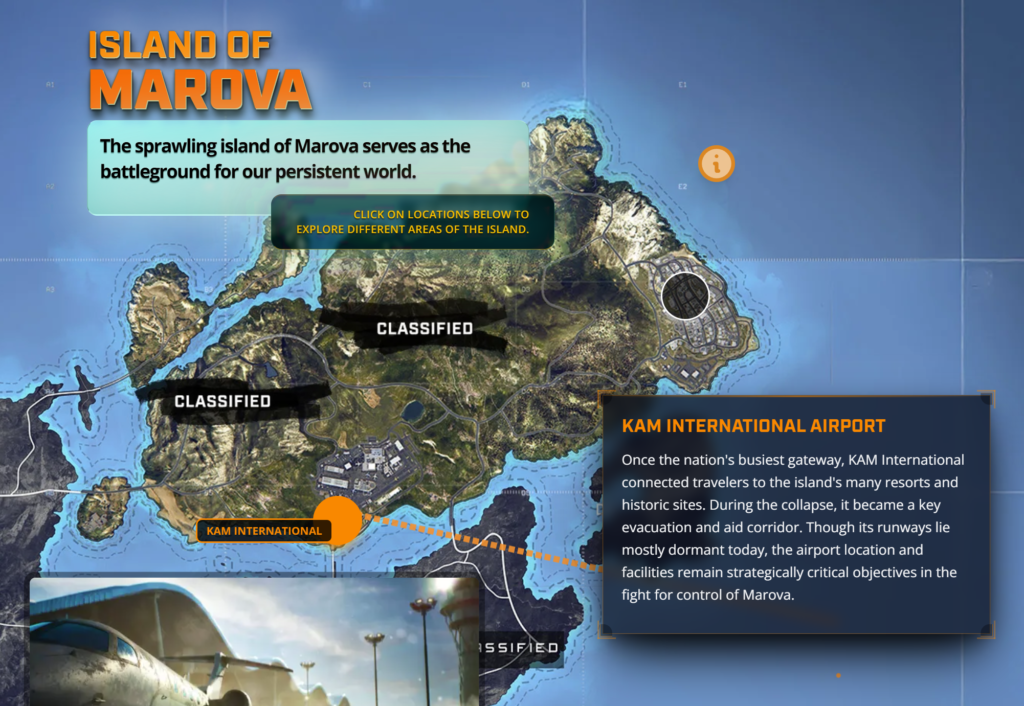
| World completeness | The store markets Marova as a massive persistent island. | The Early Access Q&A says the capital city of Alaria and areas around the airport are under construction, and the roadmap still showed Capital City of Alaria Released as in progress. |
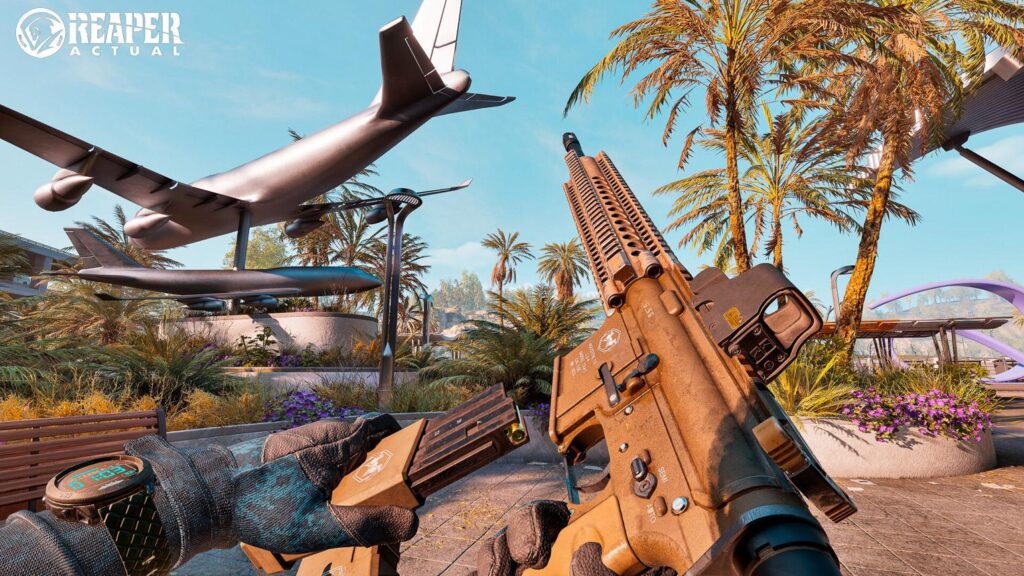
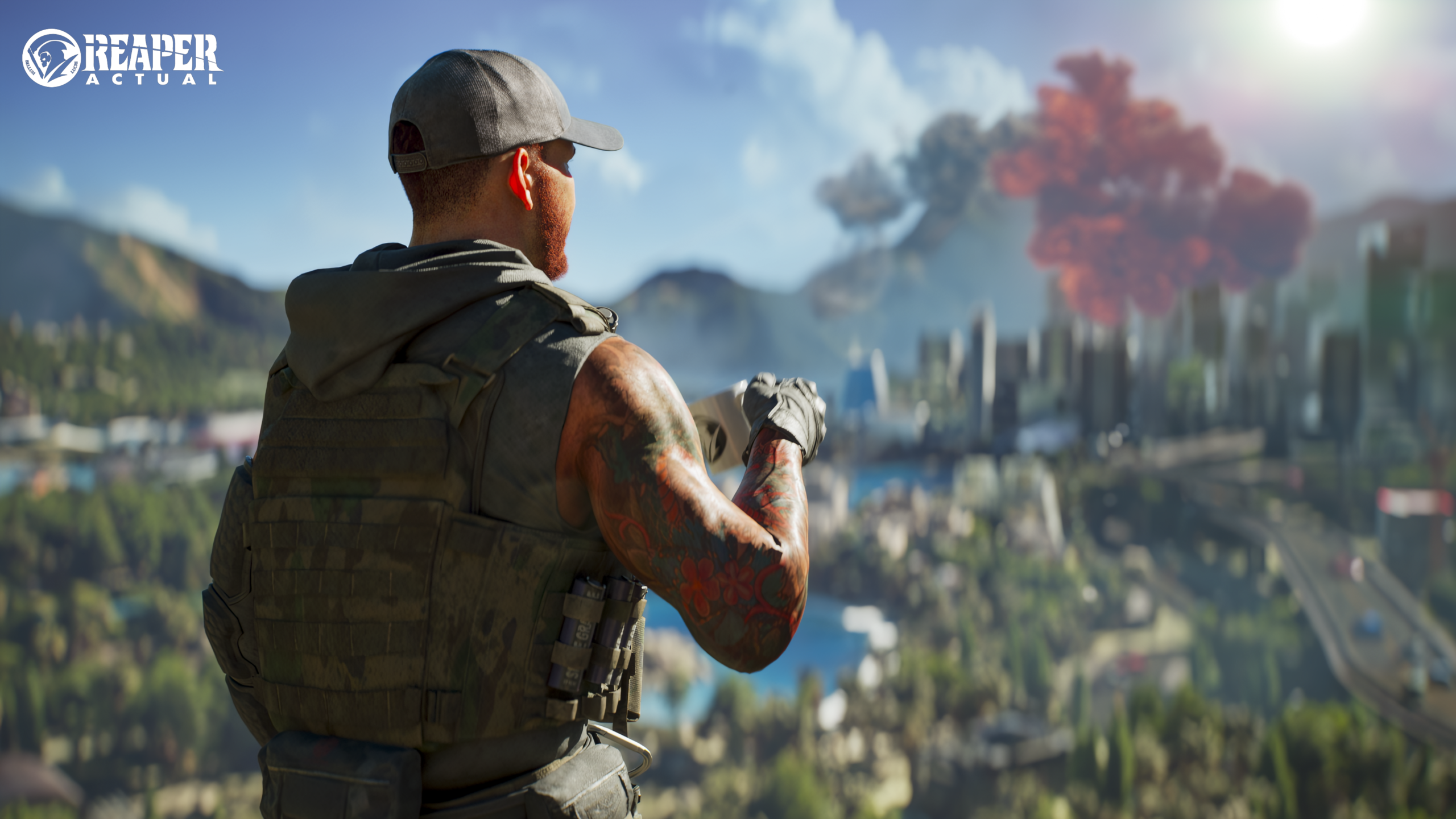
The official Steam imagery does a good job of selling the fantasy of a polished military sandbox. That is part of why the launch backlash landed so hard: the visuals and the pitch suggested something much more complete than the evidence-backed launch reality.
Technical Stability
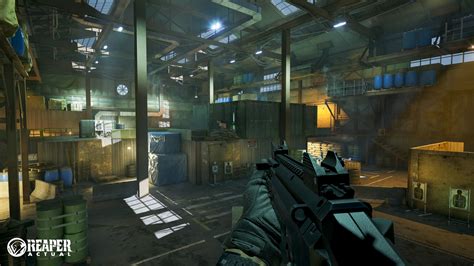
The technical ask starts high before the game even boots. Steam says the game uses kernel-level Easy Anti-Cheat and that EAC requires manual removal after uninstall. At the same time, the minimum GPU requirement is an RTX 3070 / RX 7600, and the recommended spec jumps to an RTX 4070 / RX 7800 with 32 GB RAM. I can accept demanding specs when the software is extraordinarily polished or visually transformative; I have a much harder time accepting them for an alpha that was still hotfixing extraction freezes and crash conditions days after launch.
The launch-era complaints were not subtle. One discussion user summarized the game as “game wont even load in after deploying.” Another described the experience as spending two minutes checking loadout and then ten minutes across multiple attempts trying to get into actual gameplay. Steam reviews echoed the same problem: one player said they spent 20 minutes in the hideout and were “never been able to deploy,” while another wrote, “Couldn’t even leave the hideout.” Those complaints are not just random venting when the June 2 hotfix itself says extraction through a manhole could freeze the game and that several crashes had been fixed.
The June 4 patch notes make the pattern harder to dismiss. That update lists fixes for a squad-join crash before full load-in, a crash tied to the crosshair/combat indicator, and another crash triggered by “certain interaction setups.” It also claims work on HUD performance, weapon optimization, combat visual effects, and continued Marova streaming/loading cleanup. If I am being fair, that is active support. If I am being honest, it also reads like a post-launch emergency checklist for a build that should have had more time in the oven.
Even some of the more elaborate negative criticism was aimed straight at the mismatch between what the game asks of hardware and what it delivers. One of the most detailed Steam reviews argued that the game launched with “infinite loading screens,” “non-functional AI,” and an RTX 4070 recommended requirement “for something that doesn’t justify it visually.” I would not hang my whole case on one review, but when that kind of critique sits next to the store’s own still-in-progress performance roadmap, it reinforces the same conclusion: technical stability and optimization were not launch-ready.
Gameplay Loop and Progression
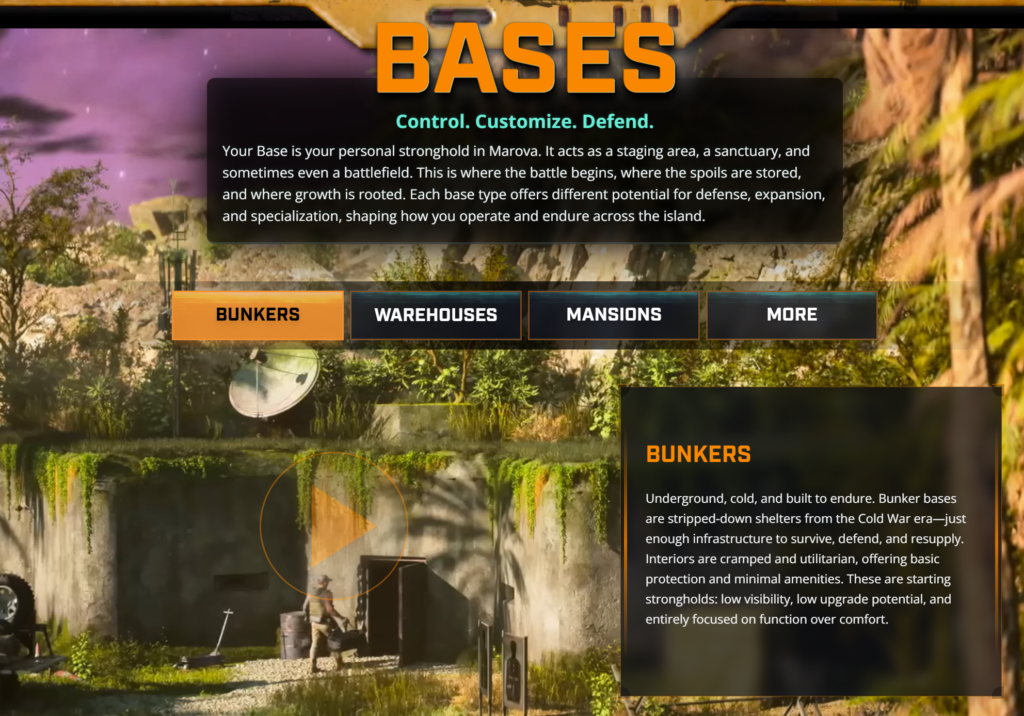
On paper, the loop is clean and compelling. I load into my base, gear up, deploy into the field, complete missions, fight NPCs and players, loot what I can, extract, and bring progress back home to level my Reaper, weapons, and gadgets. That is the loop the Steam page describes, and it is also the loop the game needed to absolutely nail on day one because everything else hangs on it.
The problem is that the most important parts of that loop were exactly where the loudest launch complaints clustered. The chart below summarizes the official loop against the failure points repeatedly reported in Steam reviews, discussions, and patch notes.
The deployment step was a brick wall for too many players. In launch discussions, one user described a loop of menu prep followed by repeated failed loads into gameplay. Another review said the buyer “spent 20 minutes in hideout” and still could not deploy. When a game’s basic deploy button is where the experience starts failing, everything downstream becomes hypothetical.
Combat, once players actually reached it, did not inspire confidence either. One discussion user described the movement and weapon sounds as clunky. Another said the AI would run through the player and then turn and shoot, with poor hit registration. A Steam review warned that spawn camping could become a serious issue. Again, I am not claiming every single player saw every single issue. I am saying the recurring reports point to combat that looked unfinished in feel, AI behavior, and encounter balance.
Extraction is where the loop stops being merely rough and becomes structurally broken. One user wrote, “Extraction doesn’t even work. Timer hits zero and nothing happens.” Another said you “cant even extract so just have fun running around collecting stuff until you die.” The June 2 patch notes then explicitly confirmed that extracting through a manhole could freeze the game. If extraction is unreliable, progression itself becomes suspect, because the genre’s entire risk-reward economy depends on being able to bank what I earn.
And progression, as described by the store itself, is thin right now. The Early Access Q&A says the mission system is limited and only certain weapon upgrades are available. What really seals it for me is that even one of the positive reviews admitted the game was “Bare bones with very limited content” and that buyers were effectively paying to help develop it. When even sympathetic players are conceding that much, I do not think it is unfair for me to say the current gameplay loop feels like a paid test, not a convincing release.
Missing and Unfinished Features
UI, controls, and options
A modern PC shooter should not launch without fundamental options, but Reaper Actual did. On June 1, a player opened a thread titled “Come on Devs its 2026 and you have no mouse inversion settings, WTH,” saying they could not play without inverted pitch. The developer replied the next day: “Working on key binds and mouse inversion.” On June 4, the patch notes finally announced full key rebinding, but framed it as “phase 1,” and also admitted that ESC still did not exit UI elements, forcing players to click the X in the corner instead. The roadmap still separately lists Game Settings V2 and a planned Satellite Transciever (minimap). To me, that is exactly what an unfinished options menu looks like.
Social and group features
The social layer is not “light” right now; by the store’s own admission, major pieces are simply absent. The Early Access Q&A says many social features are not in yet, “including grouping, parties and friends.” The May 26 official launch-delay announcement separately said expanded grouping options and an in-game friends list were still in active development. The roadmap then pushes Friends List and Clan system V1 out as planned items. For a persistent online shooter that wants to live on teamwork, bases, raids, and faction conflict, that is not a side issue. That is a missing foundation.
Vehicles, crafting, missions, and world completeness
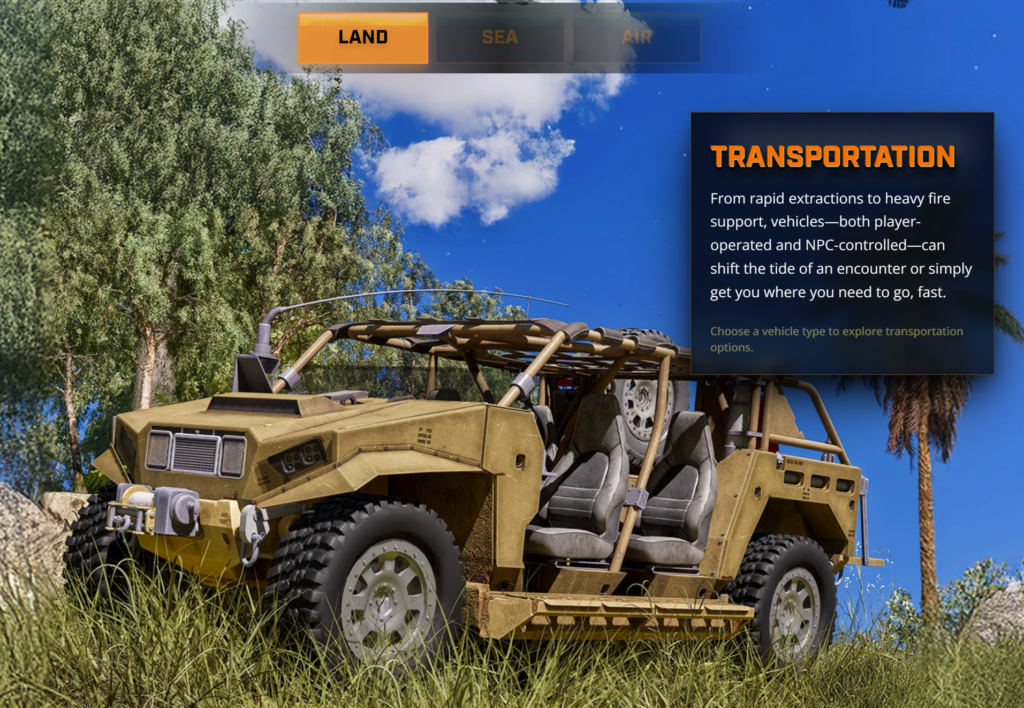
The game markets vehicles and deep crafting because those systems are part of the fantasy. But the Steam page’s own Early Access answers say the team is still developing core systems around vehicles, crafting, “more content and missions,” and even the faction setup. The roadmap reinforces that by showing Vehicles, Vehicle Garaging, Vehicle fuel system, Additional Missions, Helicopter Extractions, and a Quad style vehicle as work that was still in progress or planned after launch. It also shows Capital City of Alaria Released as in progress, while the store admits Alaria and the airport regions are under construction. I do not think it is nitpicking to say a lot of the game’s selling points are still future tense.
Controller support and scope caveat
I also found controller support sitting in an awkward gray area. Before launch, a player asked if there would be controller support by May 20. The developer answered, “We are working on it, but it might not make it in for the 20th.” On the Steam store page I pulled, there was no featured Steam controller-support badge or celebratory post-launch note saying it had arrived. Because of that, I would not treat controller support on the Steam build as a dependable, launch-ready feature based on the evidence I found.
Pricing and Early Access Ethics
The pricing structure is what turns a shaky launch into an ethical problem for me. The base game is $19.99. The Steam page then lists Charon’s Pact Edition for $30 and Stygian Oath Edition for $55 as DLC-style upgrades that require the base game. That puts the full spend at roughly $104.99. The more expensive editions are not cosmetic fluff: Charon’s Pact adds the Reaper Luna with night vision goggles in her loadout, while Stygian Oath adds three additional Reapers and a large warehouse base at one of four locations. I do not need a balance spreadsheet to understand why people immediately read that as monetizing gameplay advantage during an alpha.
That perception shows up plainly in the community reaction. In one discussion, a user wrote “$85 for two DLCs…” and another replied that they did not see the point in paying for an alpha “when you can buy pay-to-win DLCs for €30 and €50.” I cannot prove from the store text alone that the game is definitively pay-to-win in a strict mechanical sense. I can say the perception is entirely predictable when premium editions sell extra operators, special loadouts, and a larger base while the core game is still missing social systems, vehicle systems, and major content pillars.
The store’s own Early Access answers make the ethics even harder to swallow. The developers say they need community feedback and “need your support,” and they explicitly say they do not plan to price the full version differently after Early Access. In other words, this is not a temporary “cheap while rough” excuse. The multi-tier pricing is the model. One discussion thread argued the game should have launched closer to €5 given the state it was in, and even a positive reviewer conceded that buyers were effectively here to help develop the game. I agree with the criticism. If I am being asked to fund the debugging, I should not also be funneled into a $105 ladder of gameplay-affecting editions.
Community Sentiment and Developer Communication
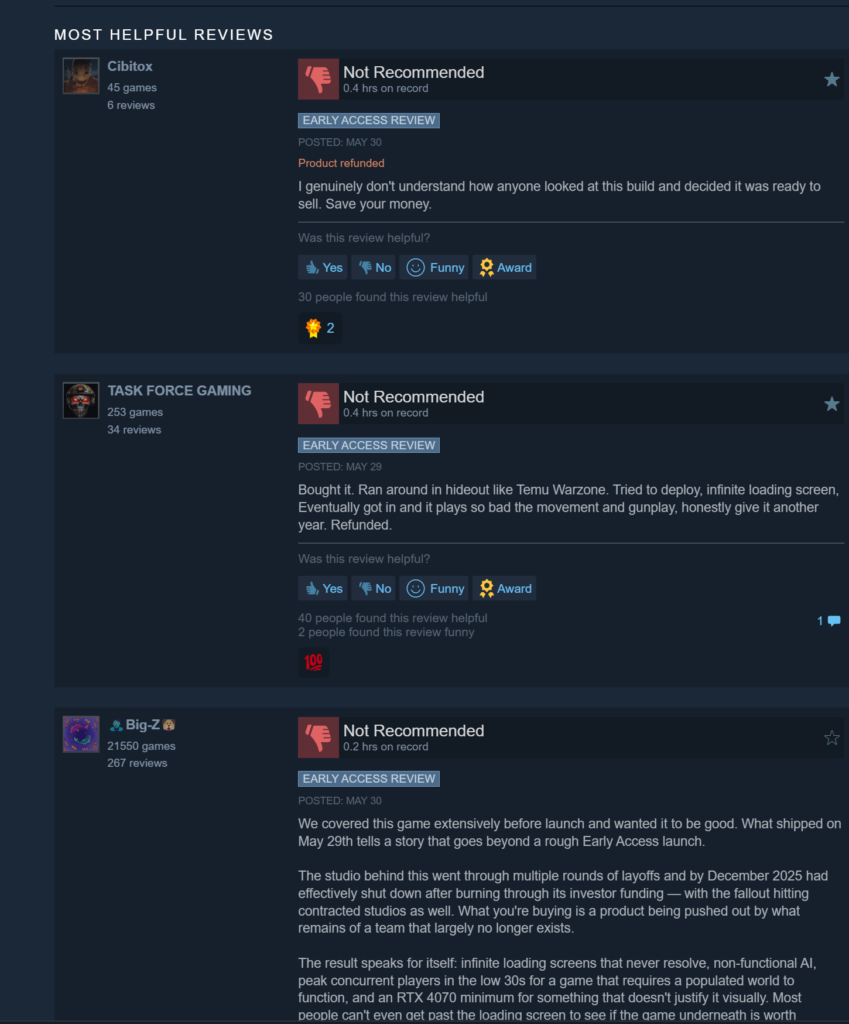
The public sentiment on Steam was brutal when I checked it. The store page showed Very Negative, with 11% positive from 51 Steam reviews, and the review panel below showed 58 total reviews, including 51 Steam purchasers and 7 “Other” reviews. The representative lines are not nuanced because the experience many players had was not nuanced: “Save your money,” “Couldn’t even leave the hideout,” and “Absolute TRASH!!!” are the kinds of reactions people leave when they feel the product should not have been sold yet.
What stands out to me is that the sympathetic voices still concede the core complaint. The accepted answer in a Steam discussion called the launch “a very very rough start” and said the developers should really call it “EARLY Early Access.” One of the positive Steam reviews described the game as “Bare bones with very limited content.” That is important because it means the split is not really “haters versus believers.” It is closer to “angry players versus hopeful players who admit the build is unfinished.” For my money, that is not enough of a defense.
The developers have communicated a lot, but most of that communication looks reactive rather than reassuring. On April 29, the studio announced extra funding and said it would help polish the player experience for a successful Steam Early Access launch. On May 26, the launch was pushed to May 29, with internal communication citing AWS fleet logistics and bug blockers, while the official announcement said the extra time would expand QA coverage and ship more features. On June 1, the roadmap was pinned. On June 2 and June 4, hotfixes addressed extraction freezes, crashes, streaming/loading cleanup, and basic control customization. I will give the team credit for talking and patching. I will not pretend that this sequence makes the launch look prepared.
The roadmap itself is the clearest admission of how much is still missing. It lists Vehicles, Performance improvements, Additional Missions, Friends List, Game Settings V2, Clan system V1, Helicopter Extractions, a Battle Pass For Season 1, Server Browser V1, 500 players on a server, Modding system V.5, UGC System V1, and a UGC Marketplace across the months ahead. When I see a live launch build still patching extraction and keybinds while also telling me battle passes, server rentals, modding, and UGC are on the roadmap, I do not feel excited. I feel like I am looking at a design document that got monetized early.
Community trust also looked fragile enough to combust around rumors. A launch-day Steam thread claimed the “community lead” had been fired in public on Discord; the developer later denied that anyone had been fired and called the thread “crazy.” I am not treating the rumor as fact. I am treating it as a sign of the atmosphere: players were already primed to assume chaos, and the studio had not built enough confidence to absorb that kind of drama cleanly.
External coverage did not do much to calm those concerns. Before launch, PC Gamer wrote that the game threw up “red flags,” particularly around the optional Web3 angle and AI-generated content choices, even while acknowledging the pedigree of the team. After launch, MMORPG.com summarized the Steam Early Access opening as negative and framed the roadmap and fixes as part of a rough start. I also found creator coverage leaning harsh, including a YouTube video titled “REAPER ACTUAL Is Rough As…” that presented the launch as barely fit for sale. None of that proves the game is doomed forever, but it does show that skepticism was not limited to a tiny Steam comment bubble.
AI Slop and Asset Concerns
There are also concerns around the game’s asset pipeline and use of AI-generated material. I am not going to claim theft without hard proof, but the presentation absolutely has that AI-smeared, generic, “content generated before it was art-directed” look in places. And words garbled and or just wrong due to bad prompts. For a game asking players to buy into a persistent world, identity matters. Right now, too much of Reaper Actual feels assembled rather than authored. That feeds into the same problem as the rest of the game: it looks like something built to sell a concept before the actual product earned that confidence.
Final Verdict
If I were posting the short version of this review on Steam, it would read something like this: Reaper Actual is trying to sell me on a dream before it can reliably deliver a session. It promises a persistent MMOFPS with scale, factions, missions, crafting, social systems, vehicles, and meaningful progression. What it actually sold at launch was a fragile, heavily monetized alpha where players were reporting failed deployment, broken extraction, crashes, missing basic options, half-finished social functionality, and multiple headline features that the store itself quietly admits are still being built.
I do not buy the “that’s just Early Access” defense here. Early Access explains rough edges. It does not excuse charging up to roughly $105 for a build whose own roadmap still contains the very systems the marketing used to hook me. It does not excuse celebrating key rebinding and mouse inversion as if they are premium post-launch features. And it definitely does not excuse asking me to accept kernel-level anti-cheat, high hardware requirements, and manual EAC cleanup for a game that still looked like triage in progress.
My recommendation is simple: do not buy this right now. I would not recommend the base edition, and I would absolutely not recommend buying into the DLC ladder. The only defensible reason to spend money today is if I consciously want to fund a volatile alpha and tolerate a lot of missing pieces while the team patches toward the product they originally advertised. For everyone else, the smartest move is to wait until the review score materially recovers, the roadmap starts converting into delivered features, and the basic loop of deploy, fight, extract, and progress works without excuses. As of June 6, 2026, I do not think Reaper Actual has earned my money or my trust. I believe this game will shut down sooner than later.