
33 Immortals Review: A 33 Player Co-Op Roguelike That Actually Has A Point
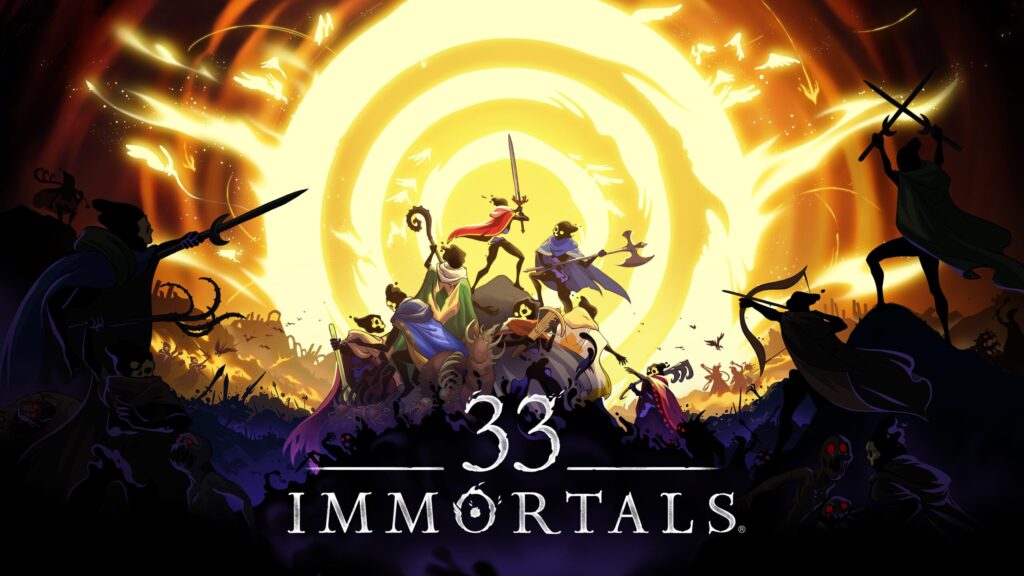
I went into 33 Immortals interested for one main reason: the pitch is immediately understandable. This is a 33 player co-op action roguelike where you jump into short raid-style runs, fight through hordes, revive other players, build up your character, and eventually try to survive massive boss fights with a pile of other people who may or may not know what they are doing.
That is the hook, and to the game’s credit, it does not bury that hook under a bunch of unnecessary nonsense. Steam describes 33 Immortals as a game where you “jump straight into runs” and “face the Wrath of God, together,” which is honestly a pretty accurate way to sell it. The game is developed by Thunder Lotus, released on June 10, 2026, and currently sits at Mostly Positive on Steam, with 77% of 1,285 Steam purchaser reviews being positive at the time I checked.
The idea is simple, but the execution is where things get interesting. 33 Immortals is not trying to be a traditional MMO, and it is not trying to be a pure single-player roguelike either. It sits somewhere between a quick-session co-op action game, a light MMO raid, and a roguelike progression loop. That combination sounds messy on paper, but when the game is working, it actually makes a lot of sense.
What Is 33 Immortals?
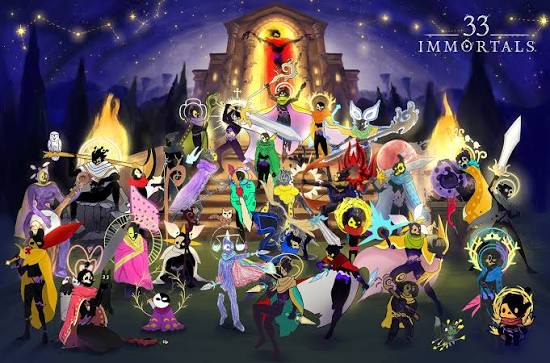
At its core, 33 Immortals is a pick-up-and-play co-op roguelike built around fast matchmaking and group survival. You can play solo, queue into runs with random players, or party up with up to four friends before being thrown into a much larger group. Steam lists the game as supporting single-player, online co-op, and cross-platform multiplayer, with features like emotes, pings, revives, shared objectives, randomized encounters, relics, weapons, and permanent upgrades.
The basic loop is easy to understand. You enter a run, fight enemies, collect resources, improve your build, complete objectives, and try to survive long enough to reach the bigger fights. Every run gives you something to work toward, and the permanent progression helps soften the blow when everything goes sideways, which it absolutely will.
The theme is also doing a lot of work here. You are playing as a damned soul rebelling against God’s final judgment, which gives the whole thing a larger than life feel without turning it into a three-hour lore lecture. It has the kind of premise that makes you immediately understand why the game exists.
The Best Part Is The Co-Op Chaos
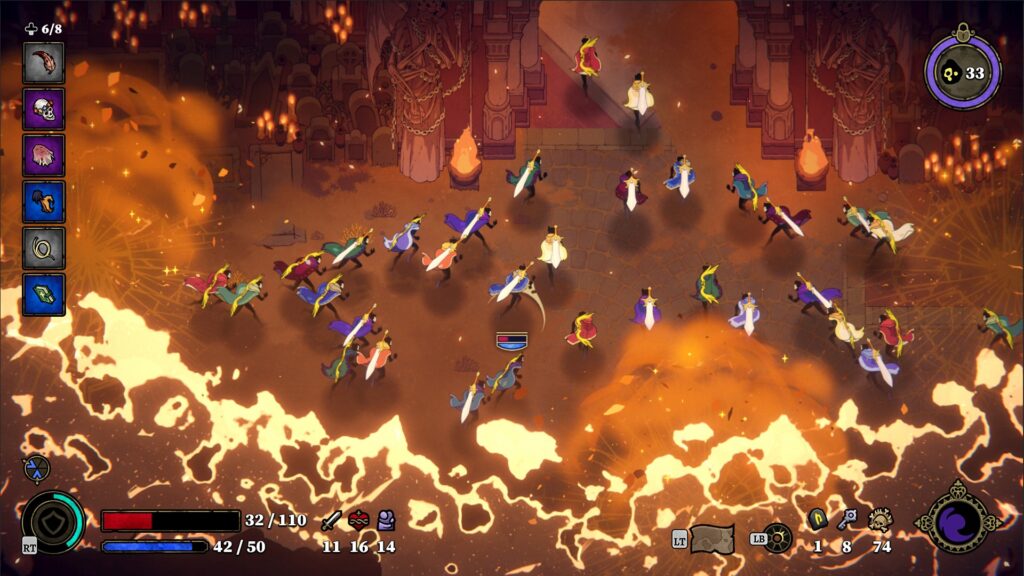
The strongest thing about 33 Immortals is the scale. A lot of co-op roguelikes say they are built around teamwork, but this one actually feels like it needs the group to function. You are not just playing next to other people. You are reviving them, coordinating through pings, trying to stack damage, dealing with objectives, and hoping enough players make it to the end to give the final boss a real attempt.
That is where the game finds its identity. It feels like an MMO raid that has been cut down into something quicker and easier to jump into. You do not need to sit in a lobby for half an hour. You do not need a guild calendar. You do not need someone named “RaidDad” explaining mechanics in Discord while everyone pretends they are listening. You just queue up, get in, and try to make the run work.
When the group is moving together, the game feels great. There is a real satisfaction in seeing dozens of players collapse onto an objective, save each other from bad decisions, and push through encounters that would be impossible alone. It gives the game a different feel from something like Hades, even though the comparison is easy to make from the outside.
Steam User Reviews Seem To Understand The Game Pretty Well
The Steam reviews are mostly positive, but the community reaction is not blind praise. Players seem to understand both what makes the game exciting and what could hurt it long-term.
One Steam reviewer called it a “weird combination of mechanics”, which is probably the cleanest way to describe what 33 Immortals is doing. Another short Steam quote that stuck out was “Raw sauce,” which is not exactly academic criticism, but I get what they meant. When the game is firing on all cylinders, it has a very specific kind of energy.
There are also players who are clearly excited about the direction of the game. One Steam review said they were “VERY excited” to see how it grows, while praising the clean visuals, rewarding combat, progression, and learning curve.
The negative reviews are worth paying attention to as well. One player said the game “gets monotonous pretty quickly” and pointed toward repetitive structure, lack of build variety, and frustrating enemy balance as their main complaints.
That mix feels fair to me. 33 Immortals has a strong foundation, but it is also the kind of game where the cracks become easier to see the longer you play.
Gameplay And Combat
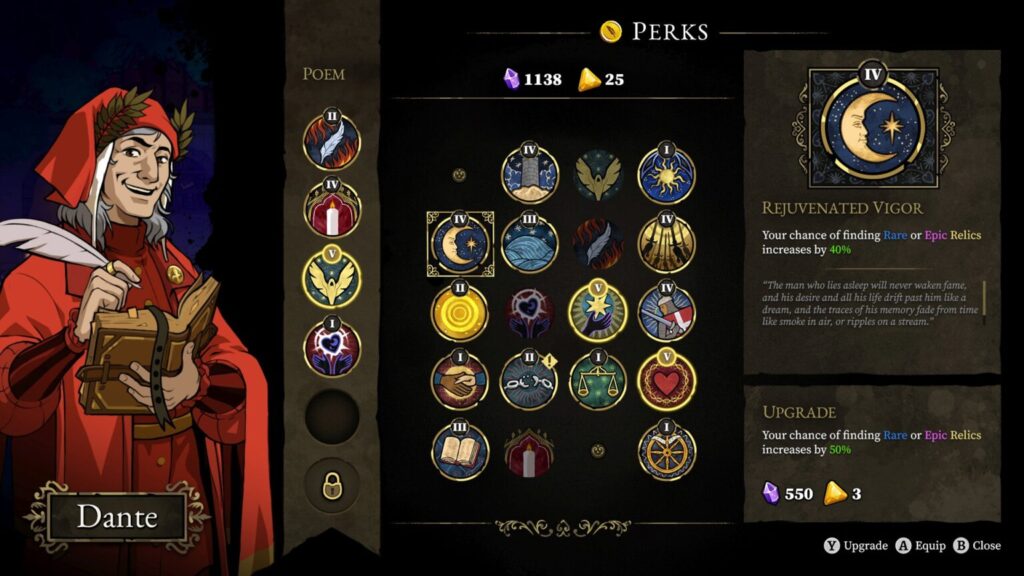
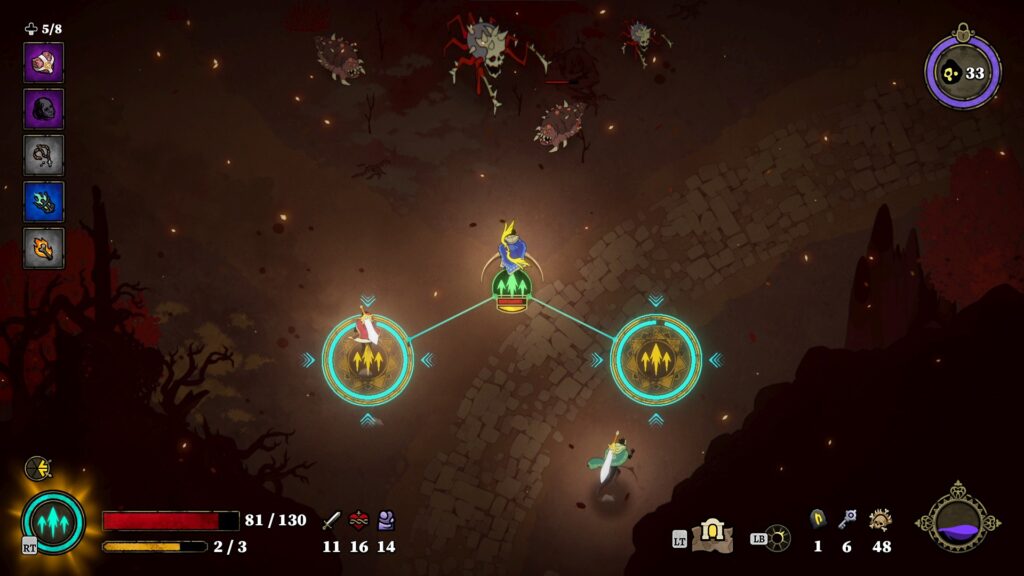
The combat in 33 Immortals is solid, but I would not call it perfect. It is fast enough to stay engaging, readable enough most of the time, and the weapons give you enough variety to start finding what fits your playstyle. The game also makes positioning matter because you are constantly balancing your own survival with the needs of the group.
That is where I think the combat works best. It is not just about whether I can dodge, attack, and build damage. It is also about whether I am helping the run stay alive. Am I reviving people when it is safe? Am I using my co-op abilities at the right time? Am I following the group, or am I off somewhere pretending I am the main character while 20 people are dying on the other side of the map?
The game naturally creates those moments, and that is a good thing.
The downside is that the combat and progression need enough long-term variety to support the amount of repetition the genre asks from players. Roguelikes live and die on whether the next run feels meaningfully different from the last one. 33 Immortals has weapons, relics, builds, randomized rewards, and permanent upgrades, but the big question is whether that will stay fresh after the first wave of excitement wears off. Steam itself advertises randomized enemies, encounters, rewards, and builds, so the expectation is already set.
Right now, I think the foundation is there. I also think this is the exact area Thunder Lotus has to keep expanding.
Progression Feels Good, But It Needs More Time
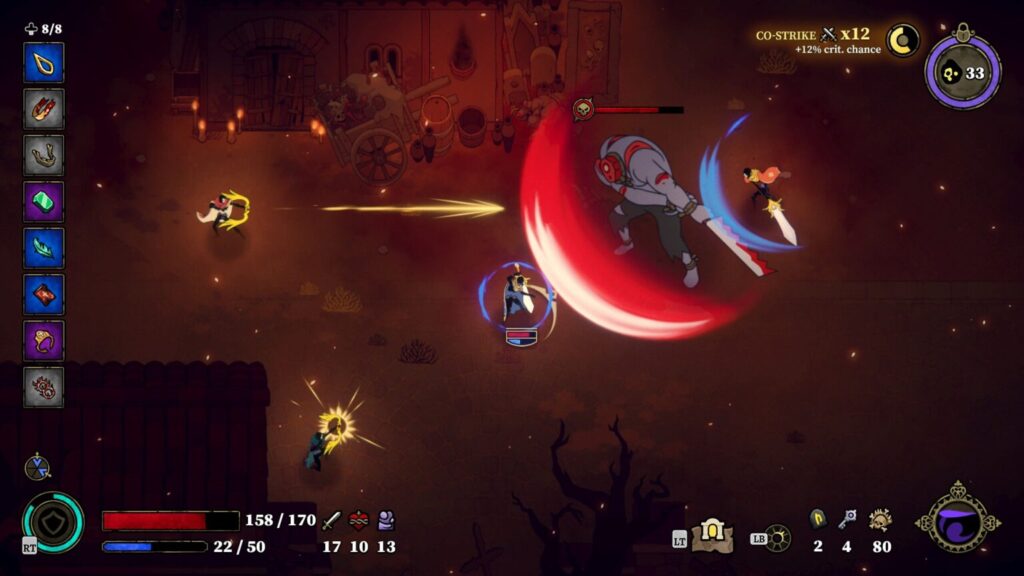
I like that every run pushes you forward. Even when a run falls apart, you are still collecting resources, unlocking upgrades, and getting a better feel for how the game wants to be played. That gives 33 Immortals the “one more run” feeling that every roguelike needs.
The issue is depth. The game cannot rely on the 33 player gimmick forever. The first few runs are going to feel exciting because the scale is new, but long-term players are going to need meaningful build choices, interesting relic combinations, more enemy variety, and bosses that stay fun after repeated clears.
This is where I am cautiously optimistic, but not fully sold yet. Thunder Lotus clearly has the art direction and the basic design idea locked in. The part I want to see grow is the replayability. A co-op roguelike like this needs content density, because players are going to burn through the obvious stuff quickly.
The Biggest Risk Is The Player Count
The best part of 33 Immortals is also its biggest long-term risk. The game is built around having a lot of players in a run. That is exciting when matchmaking is healthy, but it also means the game depends heavily on population.
A normal roguelike can survive with a smaller player base because most of the experience is solo. A traditional co-op game can usually get away with two to four players. 33 Immortals is selling the fantasy of a much larger cooperative group. If the player count stays healthy, that fantasy works. If matchmaking starts to thin out, the game could lose a lot of what makes it special.
That does not mean the game is doomed. It just means the design is risky. The player count is not just a feature here. It is part of the product’s identity.
Pricing And DLC
The base price is not bad, especially with the launch discount. Steam currently shows 33 Immortals at $14.89, discounted to $9.97 during the sale shown on the store page.
The DLC situation is where I raise an eyebrow a little. Steam lists multiple content packs for the game, including cosmetic-style packs like the Immortal Menagerie Pack, Chill Capybara Pack, Infernal Flames Pack, and others. Steam also shows a total DLC section with 12 items listed.
I do not automatically hate cosmetics. If the gameplay is intact and the paid extras are not messing with balance, fine. People can dress their doomed little soul however they want. But I do think launching with a stack of DLC packs always creates a little bit of friction with players, especially in a game that still needs to prove its long-term content loop.
For me, the base game is the only thing that really matters right now. If the core game keeps getting better, the cosmetics become background noise. If the game starts feeling thin, the DLC list becomes much harder to ignore.
Pros
The concept is genuinely strong. A 33 player co-op roguelike raid game is not something we see every day, and the game actually understands why that idea is interesting.
The matchmaking is quick and approachable. Being able to jump into runs without needing to organize a full group is one of the smartest parts of the design.
The co-op mechanics give the game its personality. Revives, pings, emotes, group objectives, and cooperative abilities all support the central idea instead of feeling like extra features thrown on top.
The visual style is clean and readable. That matters a lot when dozens of players, enemies, effects, and boss mechanics are all happening at once.
The progression loop gives you a reason to keep playing. Even failed runs can still feel useful, which helps the game avoid feeling too punishing early on.
Cons
The game depends heavily on population. If matchmaking slows down or lobbies start feeling thin, the entire 33 player fantasy takes a hit.
The combat is good, but it needs more long-term depth. The weapons, relics, and build variety need to keep growing if the game wants to hold players past the early excitement.
Some runs can feel messy in a way that is outside your control. That is part of the charm, but it can also be frustrating when the group falls apart.
The game risks repetition if future updates do not add enough variety. More bosses, more relic interactions, more enemy types, and more meaningful builds will matter a lot.
The DLC list is not a dealbreaker, but it is noticeable. Cosmetic monetization is easier to accept when the core game feels full and supported.
Who Is 33 Immortals For?
33 Immortals is for players who like co-op chaos, roguelike progression, and MMO-style group mechanics without the usual MMO time commitment. If you enjoy games where you can jump in quickly, learn through failure, and get better over multiple runs, there is a lot to like here.
It is also a good fit for people who enjoy the idea of raid mechanics but do not want the social homework that usually comes with raiding. You can get some of that large-scale group energy without joining a guild, scheduling your night around a boss fight, or listening to someone explain why your build is morally incorrect.
If you mostly play solo and hate relying on random players, this may be a harder sell. You can queue alone, but the game is still fundamentally built around group success. Your experience will depend on the people around you, for better and worse.
Final Verdict
33 Immortals is one of the more interesting co-op games on Steam right now because it has a clear idea and actually commits to it. It is not perfect, and I do not think anyone should pretend it is. The game needs more content, more build depth, and a healthy player base to keep the whole thing working long-term.
That being said, I respect what it is trying to do. It takes the energy of an MMO raid, cuts out a lot of the waiting and planning, then turns it into a faster roguelike structure that is easy to jump into. When the group clicks, it feels genuinely fun. When the group falls apart, it can be frustrating, but even that feels like part of the experiment.
For me, 33 Immortals is a strong foundation with real potential. It is not a flawless roguelike, and it is not going to replace a full MMO raid experience, but it does not need to. It has its own lane, and that lane is weird, chaotic, and surprisingly enjoyable.
Final Score: 7.5 out of 10
I would recommend 33 Immortals if you like co-op roguelikes, fast raid-style gameplay, and games that are trying something different. I would be more cautious if you need tons of build depth right away or if you are worried about long-term matchmaking. This is a game I want to see grow, because the idea is strong enough to deserve that chance.