
I Am Jesus Christ Review: Finally, A Game Where You Can Speedrun Salvation

I went into I Am Jesus Christ expecting an absolute trainwreck. Not a normal trainwreck either. I expected one of those Steam trainwrecks where the conductor is missing, the passengers are praying, the wheels are made of asset packs, and someone in the back is yelling, “Actually, this is early access.”
Because come on. It is a first-person Jesus simulator.
That sentence alone sounds like something you would hear from a friend at 2 AM right before you realize they have been browsing the weird side of Steam again. You play as Jesus, you perform miracles, you walk around the Holy Land, you deal with Satan, you gather followers, and somewhere in all of this, a game developer had to sit down and ask the very serious design question, “How should walking on water feel with keyboard controls?”
That alone deserves some respect.
My Perspective As A Non-Believer
I am coming into this as an agnostic atheist, which I still think is the only fully honest position. I do not believe in God, but I also do not know. None of us know. Some people believe strongly, some people do not, and some people inherited their religion the same way they inherited their last name, their football team, and their ability to get into arguments at Thanksgiving.
Religion fascinates me because humans fascinate me. We want answers so badly that we build entire civilizations around stories, rituals, guilt, hope, fear, love, death, forgiveness, punishment, and the idea that someone, somewhere, is keeping score. That can be beautiful, terrifying, funny, comforting, manipulative, inspiring, and deeply weird, sometimes all in the same building before coffee is served.
So yes, from my perspective, I Am Jesus Christ is ridiculous. Completely ridiculous. But ridiculous does not automatically mean bad. A lot of the best human things are ridiculous. Birthday candles, tiny dogs in sweaters, collectible keyboards, and pretending we are fine after reading one email.
This game is ridiculous, but it is also sincere. That sincerity is what keeps it from becoming a cheap joke.
The Game Is Not Mocking Faith, And That Matters
The biggest surprise is that I Am Jesus Christ is not cruel. It is not cynical. It is not some lazy “lol religion” meme game trying to farm outrage clips on YouTube. It plays everything straight, sometimes so straight that the comedy sneaks in through the back door wearing sandals.
The game wants to be respectful. It wants to present the story of Jesus seriously. It wants players to experience biblical events in an interactive way. Whether you believe those events are divine truth, historical tradition, mythology, moral storytelling, or an ancient group project with very intense fans, the developers clearly care about the material.
That made me want to be nicer to it.
I can forgive a lot when a game is trying. I can forgive jank, weird pacing, odd animations, and the occasional moment where the Holy Land feels like someone forgot to pay the NPC bill. What I have a harder time forgiving is cynicism, and this game does not feel cynical. It feels earnest. Painfully earnest sometimes. Like someone at Bible study discovered Unreal Engine and said, “No, I really think we can make this work.”
And honestly, they sort of did.
What I Am Jesus Christ Actually Is
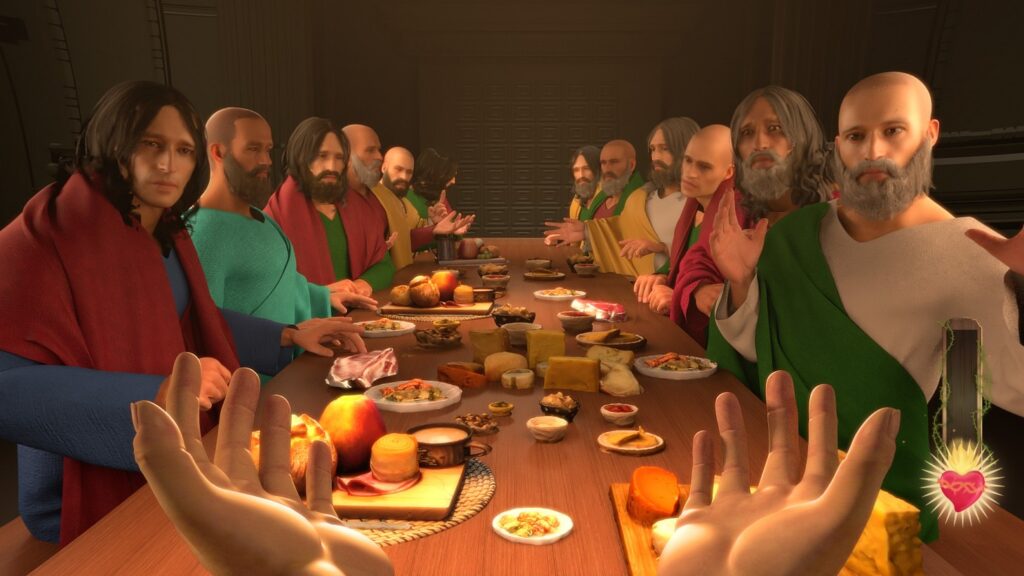
At its core, I Am Jesus Christ is a first-person narrative adventure inspired by the Gospels. It follows major moments from Jesus’s life, including baptism, miracles, teachings, temptation, crucifixion, and resurrection. The game includes more than 30 miracles, biblical characters, scripture references, prayer mechanics, spiritual guidance, and a semi-open structure where you move through different areas tied to the story.
That sounds insane on paper because it is insane on paper. It is also much calmer in practice than the premise suggests. This is not a massive Jesus RPG where you are min-maxing forgiveness, swapping legendary sandals, and putting skill points into “Blessed Charisma.” Although, let us be honest, someone will make that eventually and Steam will recommend it to me at 3 AM.
Instead, this is closer to religious edutainment mixed with a walking simulator and light adventure mechanics. You move from place to place, talk to people, trigger scenes, pray, perform miracles, and follow objectives through key biblical moments. The game is not mechanically deep, but I also do not think it is trying to be. It wants to be an interactive retelling first and a game second.
That distinction matters.
Steam Reviews Are Kinder Than You Might Expect
The Steam reviews are surprisingly positive, and that shocked me more than any miracle in the game. I expected chaos. I expected joke reviews, theological arguments, angry essays, and at least one person claiming the game was either proof of God or proof God abandoned us.
Instead, a lot of players seem to appreciate the game for what it is trying to do. Many positive reviews frame it less like a traditional game and more like an interactive religious experience. Religious players seem to enjoy the respectful presentation, while some curious non-religious players appreciate the sheer novelty of it existing at all.
The negative reviews are also fair. People point out the walking, the shallow mechanics, the rough voice work, the empty spaces, and the general indie awkwardness. I cannot really argue with those complaints. They are valid. This is not a polished blockbuster, and nobody should pretend it is.
The interesting part is that both sides make sense. If you want a strong traditional game, you may bounce off it. If you want a sincere interactive Gospel experience, you may be much more forgiving. If you are an atheist like me, you may spend half the time laughing at the absurdity and the other half thinking, “Ok, but this is kind of sweet.”
Jesus With Quest Markers Is Inherently Funny
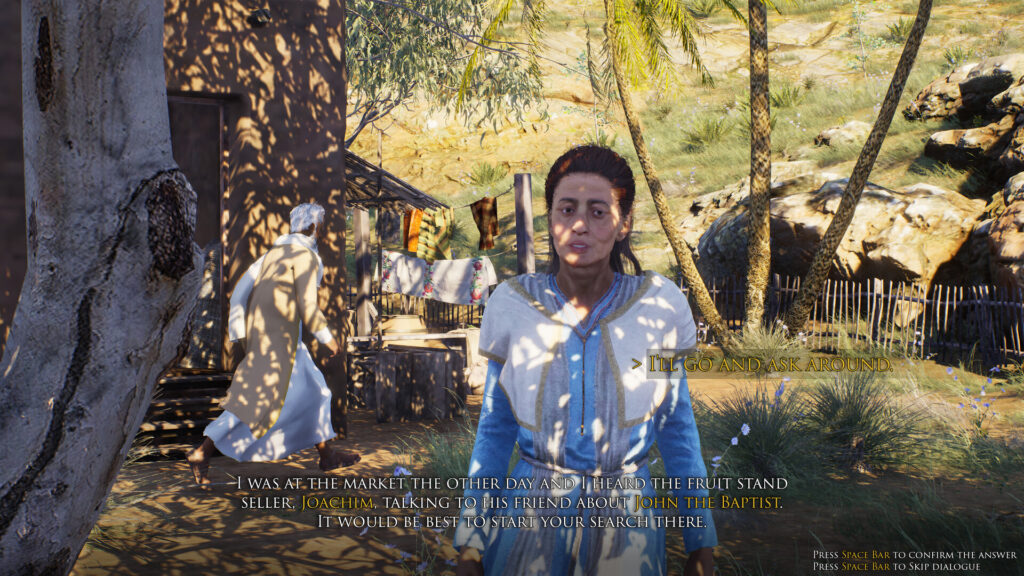
Let us address the holy elephant in the room. Jesus with quest markers is funny.
It just is.
That does not mean it is hateful. That does not mean it is offensive. It means that taking one of the most sacred figures in human history and giving him objective prompts creates an immediate comedy situation. The second divine mystery becomes a UI element, my brain starts giggling like a child in church who knows he should not be giggling, which of course makes it worse.
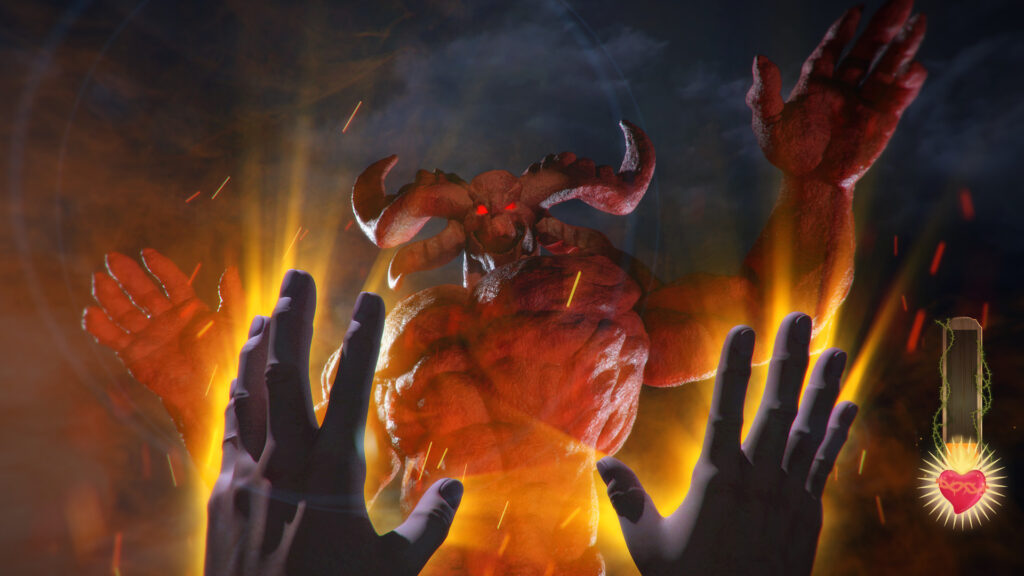
You get moments where the game clearly wants reverence, but the structure still has to function like a video game. So now prayer is a mechanic, miracles are interactions, followers feel like progression, temptation becomes a sequence, and salvation has a waypoint.
That is not the developers being disrespectful. That is just what happens when faith meets game design. Games need systems, and systems make everything a little silly. The unknowable becomes readable. The divine becomes clickable. The sacred becomes “press button to continue.”
Somewhere, a game designer had to decide how much feedback the player should get after healing someone. That is comedy.
The Ricky Gervais Angle

Humans reject thousands of gods, accept one depending largely on where they were born, then act very confident that this time the paperwork is correct.
It does not mean religious people are stupid. That is lazy. Plenty of brilliant people are religious, and plenty of atheists are absolute morons. Trust me, I have seen comment sections. Intelligence does not protect anyone from being confidently ridiculous.
The comedy is in the human certainty. We do not know what happens after death, so naturally, we created entire belief systems, rules, buildings, outfits, holidays, wars, music, guilt structures, and now, a Steam game.
That is the part I find fascinating. I Am Jesus Christ is not just a weird game. It is a weirdly perfect human artifact. We told stories around fires, then in temples, then in books, then in movies, and now with objective markers and shader compilation.
Honestly, that might be the most human thing in this entire review.
The Gameplay: A Lot Of Walking Toward Salvation

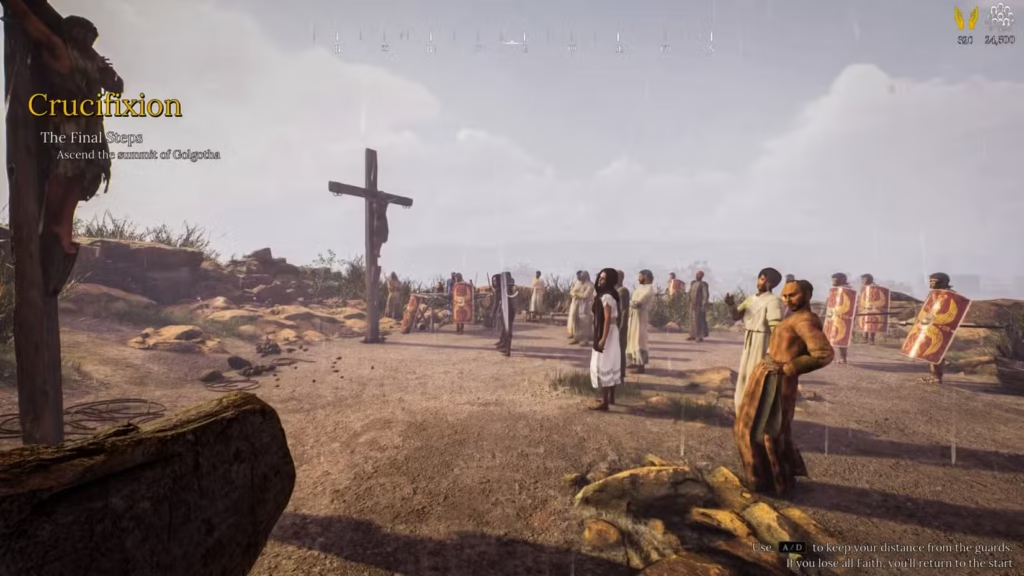
As a game, I Am Jesus Christ is very simple. Sometimes too simple. You walk through biblical locations, follow objectives, listen to dialogue, pray, perform miracles, and continue the story. There are moments where the atmosphere works, especially when the lighting, music, and landscape come together. At its best, the game has a calm, reflective feeling that fits the material nicely.
At its worst, it feels empty.
There is a lot of walking, and while that may be historically accurate, historical accuracy does not always make a great gameplay loop. I am sure Jesus walked everywhere. I am also sure Jesus did not have to worry about whether the pacing would hold player retention on Steam.
Some areas feel too large for what is actually in them. You move through spaces that sometimes feel peaceful and sometimes feel like the NPCs all went to lunch. The Holy Land should feel alive, messy, crowded, desperate, spiritual, political, and human. Here, it can occasionally feel more like a biblical museum exhibit after closing.
That said, I did not hate the slower pace. There is something oddly appropriate about a game like this not being frantic. Not every game needs to scream at you every four seconds. Sometimes walking, listening, and absorbing the setting is fine. The issue is that the game does not always put enough along the path to make that walking feel meaningful.
Miracles As Mini-Games Are Weird, But I Get It
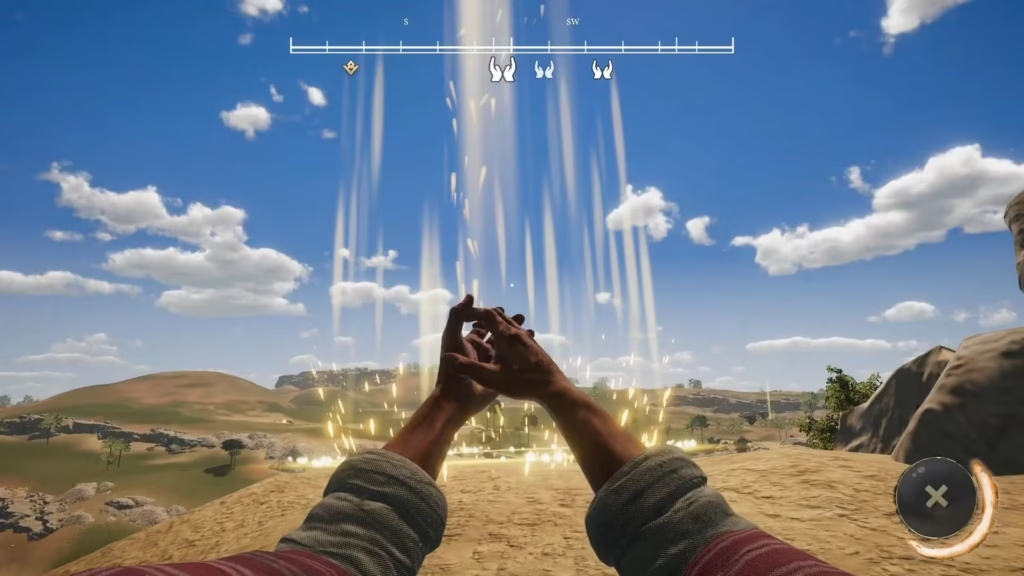
The miracles are obviously the selling point. If you make a Jesus game and do not let the player heal people, walk on water, resist Satan, and perform divine acts, then congratulations, you have made Desert Walking Simulator: Robe Edition.
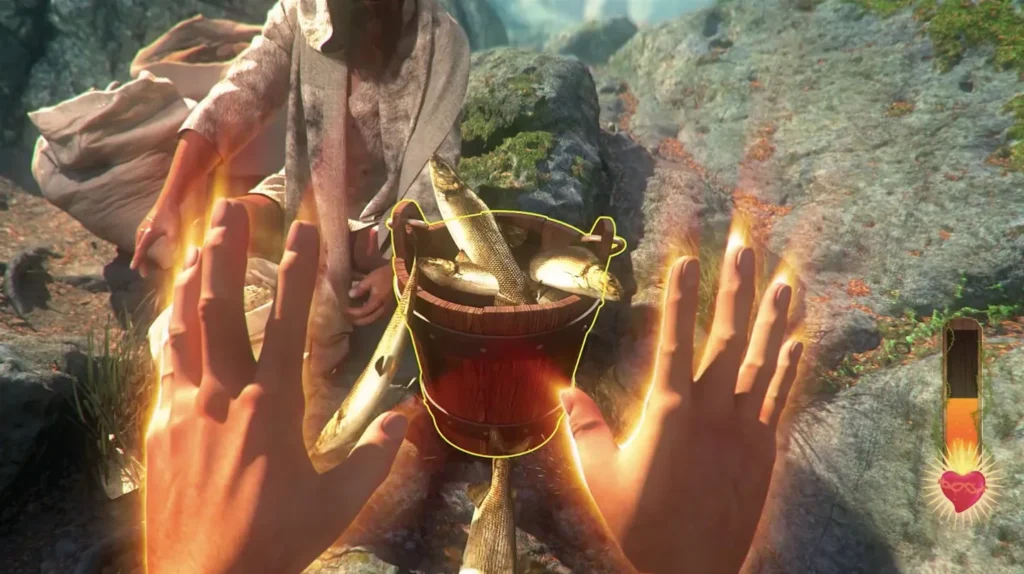
The issue is that miracles are hard to make interactive without making them silly. In I Am Jesus Christ, many of these moments become basic mini-games or guided interactions. You click, follow prompts, complete the sequence, watch the result, and move on.
On one hand, that is not mechanically thrilling. Healing the sick should probably feel more powerful than completing a mild customer support ticket. On the other hand, what else are they supposed to do? If a miracle is too automatic, the player feels disconnected. If it is too gamey, suddenly Jesus is doing holy rhythm mechanics.
There is no perfect answer here. The developers picked a simple, accessible route, and while I wish the miracles had more weight, I understand the problem they were trying to solve. Turning divine power into gameplay is like trying to explain Wi-Fi to a goat. You can attempt it, but at some point everyone involved is just standing there confused.
The Voice Acting Needed Divine Intervention
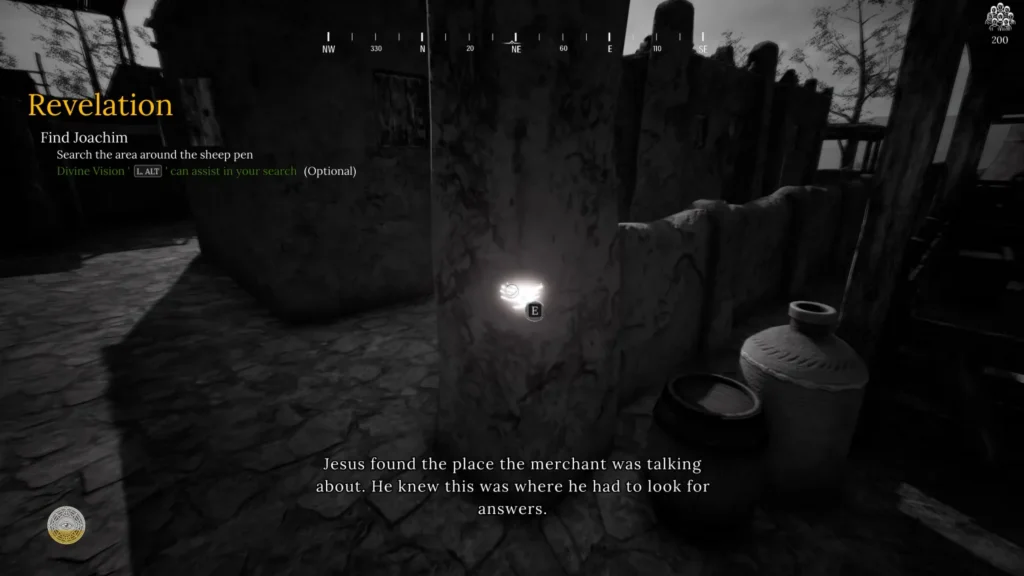
The biggest problem is the voice work.
The game uses AI-assisted voice production, and I understand the practical reason. Small team, limited budget, tons of dialogue, lots of characters. Voice acting is expensive. Not every indie developer has a giant pile of money sitting around labeled “Apostle Audio Fund.”
Still, understanding the reason does not make the result good. The voices often sound stiff, synthetic, and emotionally disconnected. Some lines feel like they were delivered by a Bible app that just found out it has jury duty.
That hurts the experience more than anything else because this story depends on tone. If a scene wants to feel emotional, reverent, painful, or profound, the voice work needs to carry some of that weight. When it sounds artificial, the moment collapses. Instead of thinking about forgiveness, sacrifice, or faith, I am wondering why this disciple sounds like my router is reading scripture.
This is the one area where I think the game would benefit massively from a future update or expanded voice pass. Better voice acting would not fix every issue, but it would dramatically improve the emotional impact.
The World Has Atmosphere, But Not Always Life
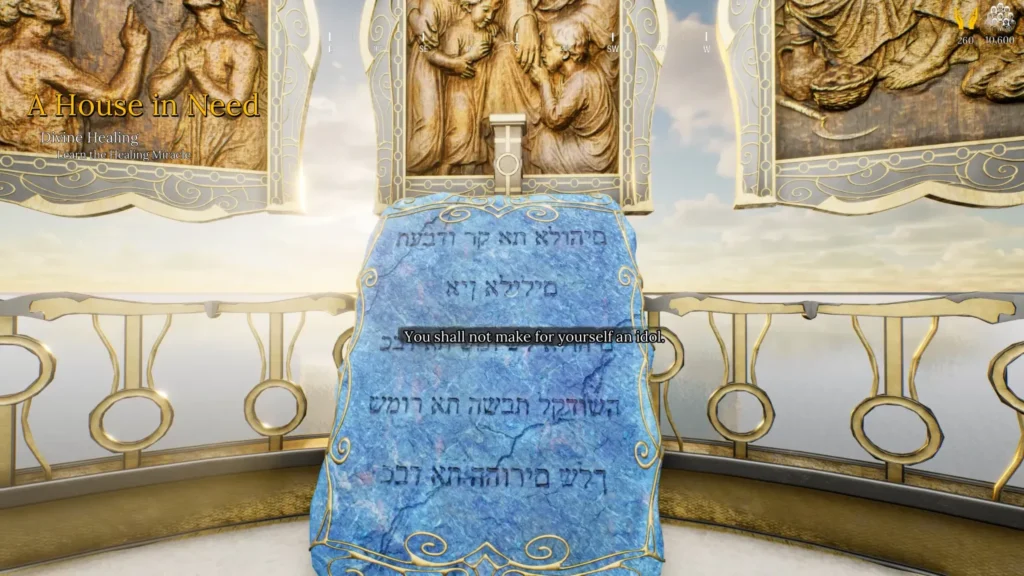
Visually, the game has moments where it looks surprisingly nice. The lighting can be lovely, the landscapes can be peaceful, and some scenes have a real sense of place. It is not visually stunning in the way a huge-budget game is, but it can absolutely create a mood.
The problem is consistency. Some areas feel atmospheric, while others feel underpopulated or unfinished. The world is often more symbolic than alive. That may work for players who approach it like an interactive Bible lesson, but as a game world, it can feel thin.
Still, I want to be fair. This is not a giant studio production, and the scope is weirdly ambitious. Recreating biblical locations, major events, dozens of characters, and spiritual moments in first person is not exactly an easy Tuesday. The fact that the game manages to create any atmosphere at all is worth acknowledging.
It may not always feel alive, but it often feels earnest, and that carries it further than I expected.
Why I Am Being Forgiving
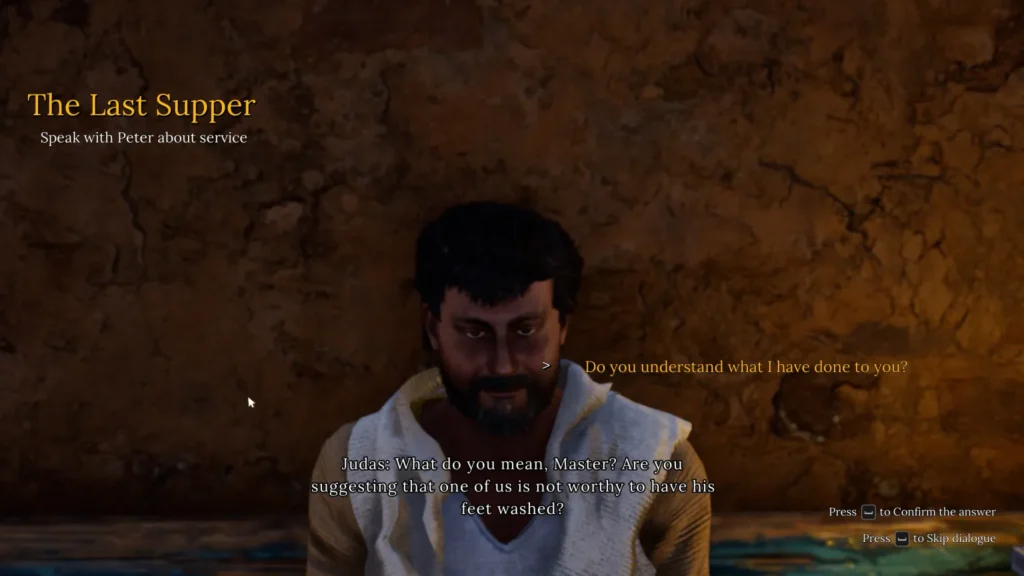
I am being forgiving because the game earns some grace. Yes, I know. Grace. Very on theme. Everyone calm down.
The reason is simple. I Am Jesus Christ is trying something genuinely difficult. Not difficult in the “we made a soulslike with stamina bars” way. Difficult in the “how do you turn one of the most influential religious stories in human history into a first-person video game without making everyone furious or bored” way.
That is a hard design problem.
A game like this has to satisfy religious players who want reverence, skeptical players who want something interesting, casual players who need accessibility, and gamers who expect actual mechanics. That is a lot of different audiences pulling in different directions. One group wants sacred reflection, another wants better gameplay, another wants historical accuracy, and another just wants to know if Jesus can bunny hop.
Given all that, the game lands better than it probably should.
Pros
The biggest strength is how unique it is. There are countless games about killing, looting, crafting, surviving, farming, and emotionally unavailable men learning to parent. There are not many sincere first-person Jesus games that let you walk through biblical events without turning the whole thing into a cheap joke. That alone makes it memorable.
The sincerity also goes a long way. Even when the game is awkward, it feels like the awkwardness of people trying very hard to do something meaningful. There is no sneering here. No cheap contempt. No lazy shock value. It treats the material with respect, and whether you believe in that material or not, that choice gives the game a strange charm.
There are also moments of real atmosphere. When the music, lighting, and biblical framing line up, the game can feel peaceful and reflective. Not perfect, not mind-blowing, but effective. For religious players, I can see how those moments might land with much more weight than they did for me.
And finally, the accidental humor is fantastic. Jesus with objective markers, miracle mini-games, divine power systems, and holy UI prompts will never not be funny to me. But again, I mean that kindly. The comedy comes from the impossible task of turning faith into gameplay, not from the game being mean.
Cons
The voice work is the biggest issue. AI-assisted voices may have helped the developers finish the game, but they also hurt the emotional tone. For a story this dependent on spoken dialogue and reverence, that is a serious problem.
The gameplay is also shallow. The miracles are interesting as ideas, but mechanically they are often too basic. Walking takes up a lot of the experience, and while the slower pace can sometimes fit the subject matter, it also drags when the world does not give you enough to engage with.
The open spaces can feel empty, the pacing can wobble, and the production values are uneven. There are plenty of moments where you can see the seams, the limitations, and the budget. If you are looking for a polished mainstream adventure game, this is not that.
The tone also fights with the format. The game wants sacred reverence, but video games need mechanics, and mechanics have a way of making everything feel a little silly. That is not entirely the game’s fault, but it is something you feel constantly.
Final Thoughts
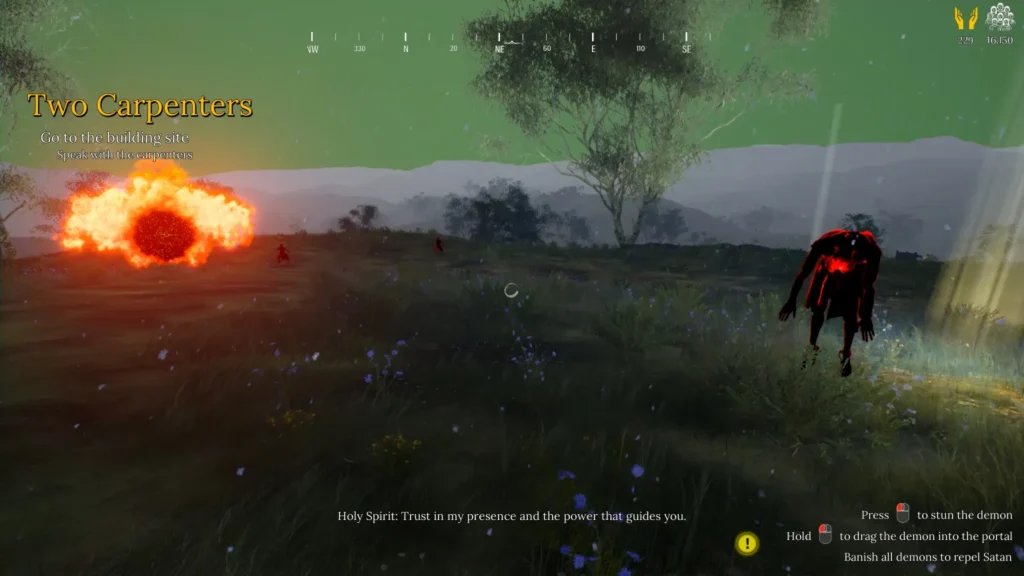
I Am Jesus Christ is ridiculous. I say that with kindness. The premise is ridiculous, the execution is sometimes ridiculous, and the idea of turning divine mystery into a Steam game with objectives is extremely ridiculous. But ridiculous does not mean worthless. In fact, I think the ridiculousness is part of what makes it memorable.
As an atheist, I did not come away converted. I did not see the light, unless we are counting bloom effects. I still do not believe, and I still think humans are deeply funny little creatures for being so confident about unknowable cosmic paperwork.
But I also came away with more respect for the game than I expected.
It is sincere. It is strange. It is flawed. It is kind. It tries very hard. Sometimes it stumbles directly into comedy. Sometimes it creates a peaceful moment that works better than it has any right to. Sometimes it feels like a Bible study group accidentally discovered game development and just kept going until Jesus had a quest log.
And honestly, I would rather play something this weird, earnest, and memorable than another perfectly polished nothingburger that evaporates from my brain the second I close it.
So my final score is a forgiving 6.5 out of 10.
Not because it is a great traditional game. It is not. The mechanics are too basic, the pacing is uneven, and the voice work needed a miracle of its own. But as a sincere, bizarre, interactive religious experience, it has value.
It may not save your soul, but it might save you from playing another generic open-world crafting survival roguelite extraction farming deckbuilder with seasonal cosmetics.
And for that, praise be to the Steam algorithm.