
Artistic Corruption and Mechanical Precision: A Comprehensive Review of Ink Inside S+

Having spent dozens of hours dissecting the S+ Launch of Ink Inside, I wanted to provide a comprehensive technical review of Blackfield Entertainment’s latest update. This review focuses strictly on the mechanical framework, system performance, and the controversial difficulty scaling, bypassing any narrative elements entirely.
Engine Optimizations and Combat Framework
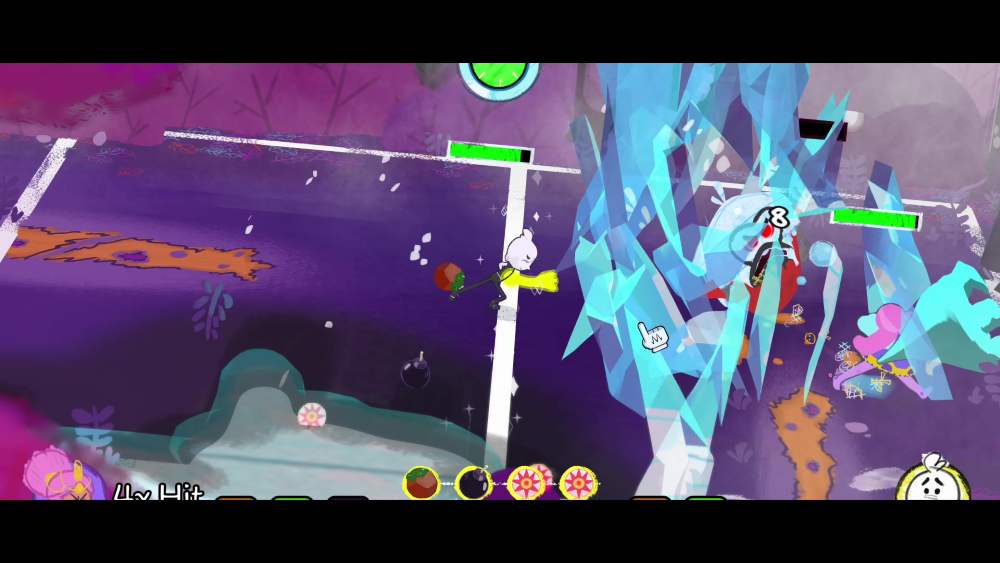
The core gameplay relies on a lane based projectile system. Players must manage incoming objects while navigating strict spatial constraints. During my extensive playthrough, I noticed substantial improvements to the underlying physics engine. Collision detection remains incredibly consistent even when the screen is completely saturated with particle effects and overlapping hazard zones.
Combat revolves around Cores and Accessories that dictate player archetypes. This modular design allowed me to construct highly specialized loadouts. I found myself focusing on heavy knockback abilities for crowd control encounters and rapid area denial tactics for high mobility bosses. The system is incredibly responsive. Input latency has been reduced to near zero. This optimization is an absolute necessity for the parry heavy combat loop that the game demands.
The S+ Mode Difficulty Mechanics

The new difficulty tier acts as a complete mechanical overhaul rather than a simple numerical increase in enemy health points. It completely removes the standard safety nets and imposes severe restrictions on player movement.
Boss attack animations have been shortened by several frames to demand much faster reaction times. Furthermore, the environmental corruption tracking speed has been increased to prevent any static defensive positioning. I experienced firsthand that players are essentially downed after taking a single hit from the primary environmental hazard.
Resource regeneration is strictly limited to grazing maneuvers. Players must narrowly dodge projectiles to build energy. These changes transform the combat into a rigorous rhythm exercise. The hitboxes remain precise. This structural fairness ensures that failures are the result of player execution rather than systemic errors.
Accessibility and Interface Design

Despite the punishing nature of the new difficulty tier, the developers have integrated robust accessibility tools. The visual presentation utilizes a high contrast color space design. This deliberate visual choice naturally accommodates players with color deficiencies without requiring a separate menu toggle.
The options menu allows for deep customization. Sliders are available for controller deadzones, aim smoothing, enemy movement speed, and resource recharge rates. This level of granular mechanical control allowed me to tailor the input experience perfectly to my specific hardware setup.
Steam User Reviews

User feedback on the Steam platform highlights the mechanical appeal of the game. Here are direct quotes from real user reviews.
“fun times. eagerly waiting for the next part of the story to drop.” by TXB
“play this game play this game play this game play this game play this game” by Nameless
“Its good.” by Saren
“The story, the characters, the gameplay. All really fun and more memorable than almost anything else I played in 2025” by an anonymous Steam user
Pros and Cons
Pros
- The physics engine handles complex projectile trajectories with exceptional efficiency.
- Deep customization options exist for input smoothing and custom difficulty scaling.
- The modular build system offers extensive mechanical replayability and theory crafting.
Cons
- The single hit failure condition in the new mode causes severe and abrupt difficulty spikes.
- Managing the upgrade systems can overwhelm new players due to dense menu navigation.
- The increased speed of the environmental hazard limits build viability in the late game stages.
Conclusion
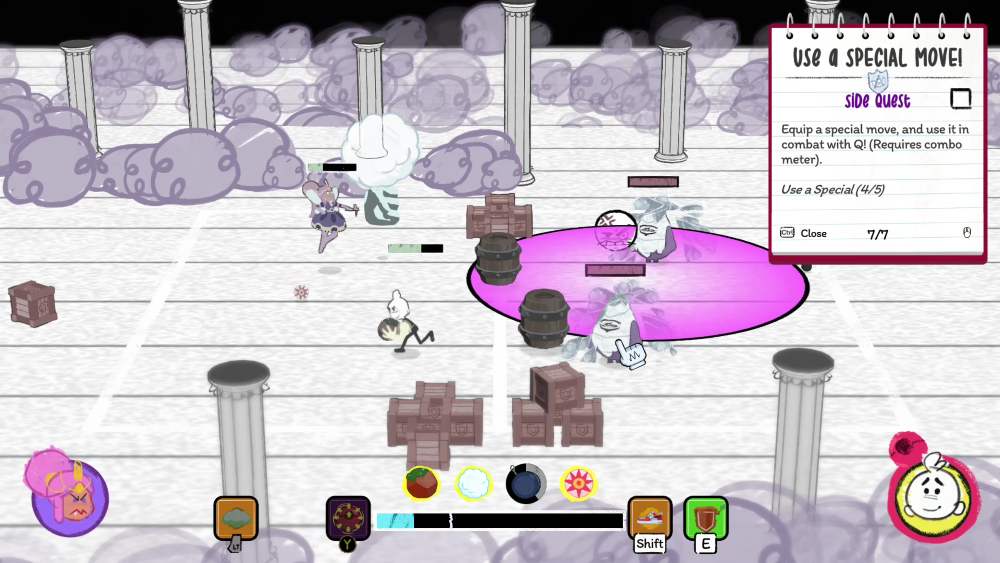
The S+ Launch of Ink Inside is a rare example of a technical update that fundamentally redefines the player’s relationship with the game’s mechanics. By stripping away the margin for error and forcing a mastery of frame data and environmental awareness, Blackfield Entertainment has created a high stakes environment that rewards genuine skill. While the abrupt difficulty of the new mode may alienate those looking for a casual experience, the sheer precision of the controls and the depth of the build customization make this the definitive version of the title for serious players.